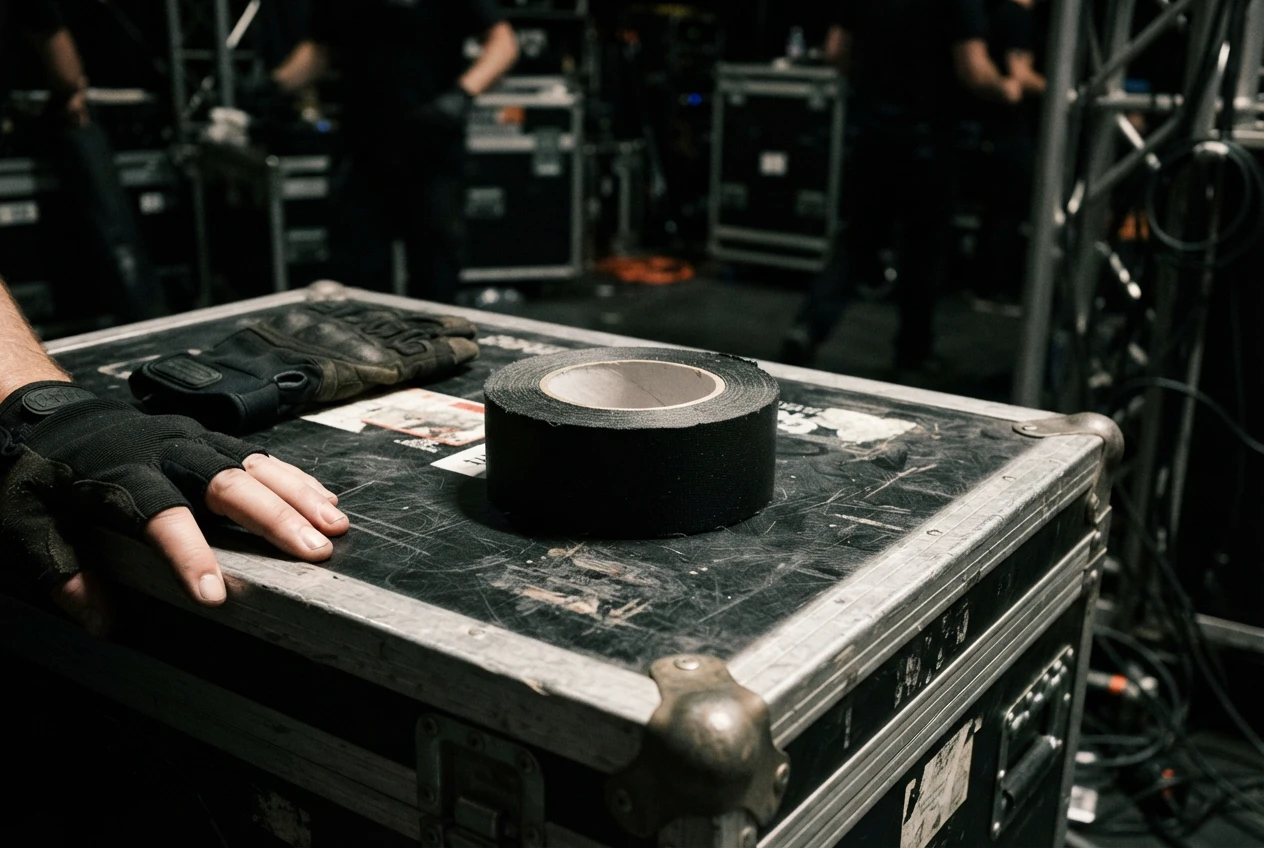
Why gaffer tape is not duct tape (and why that matters).
Ask a stagehand what is in their pocket and you will get three things: gloves, a knife and a roll of gaffer tape. They say a show is held together by tape, sweat and teamwork. And the first one is literally true. But where does the word "gaffer" actually come from? And why does every technician give you a funny look when you call it duct tape?
After the nadar barrier and the cable tie, this is part three in the series: everyday crew equipment with a remarkable story behind it.
First, something personal
At home, we always laughed at our dad. He fixed everything with gaffer tape.
Part of the car hanging loose? Gaffa.
A shelf hanging crooked? Gaffa.
Broken zipper on his jacket? Gaffa.
We thought that was hilarious. Until I ended up in the industry myself, took over his company, and one day caught myself gaffing my own jacket. The apple, the tree. You know the saying.
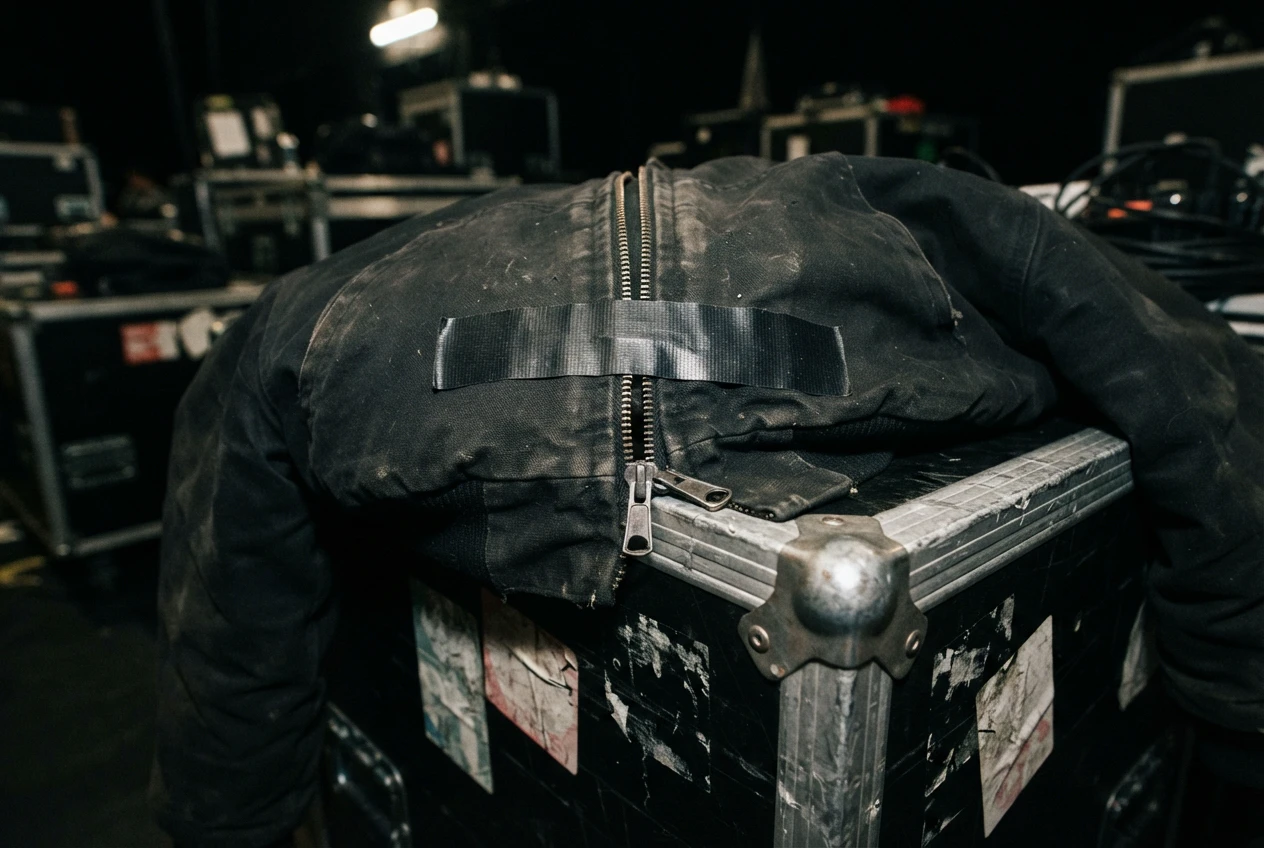
But our dad was right, and the entire event industry agrees with him: there is no problem that cannot be solved at least temporarily with a roll of good gaffer tape. The only question is: who invented this miracle stuff?
Ross Lowell, 1959: a lighting man with a problem
The answer comes from the film world. Ross Lowell was a cameraman, lighting designer and inventor in New York. In the late 1950s, he was working on a documentary that required him to mount lights on location. Quickly, securely, and without damaging anything.
The tape available at the time was either too weak, left a sticky mess behind, or melted in the heat of the lamps. Familiar problem, bad options. So Lowell did what every good technician does: he made something himself.
In 1959, he took the adhesive from Permacel tape by Johnson & Johnson and put it on a cloth backing instead of plastic. The result was a tape that was incredibly strong, withstood heat, could be torn by hand and came off cleanly without residue. Gaffer tape was born.
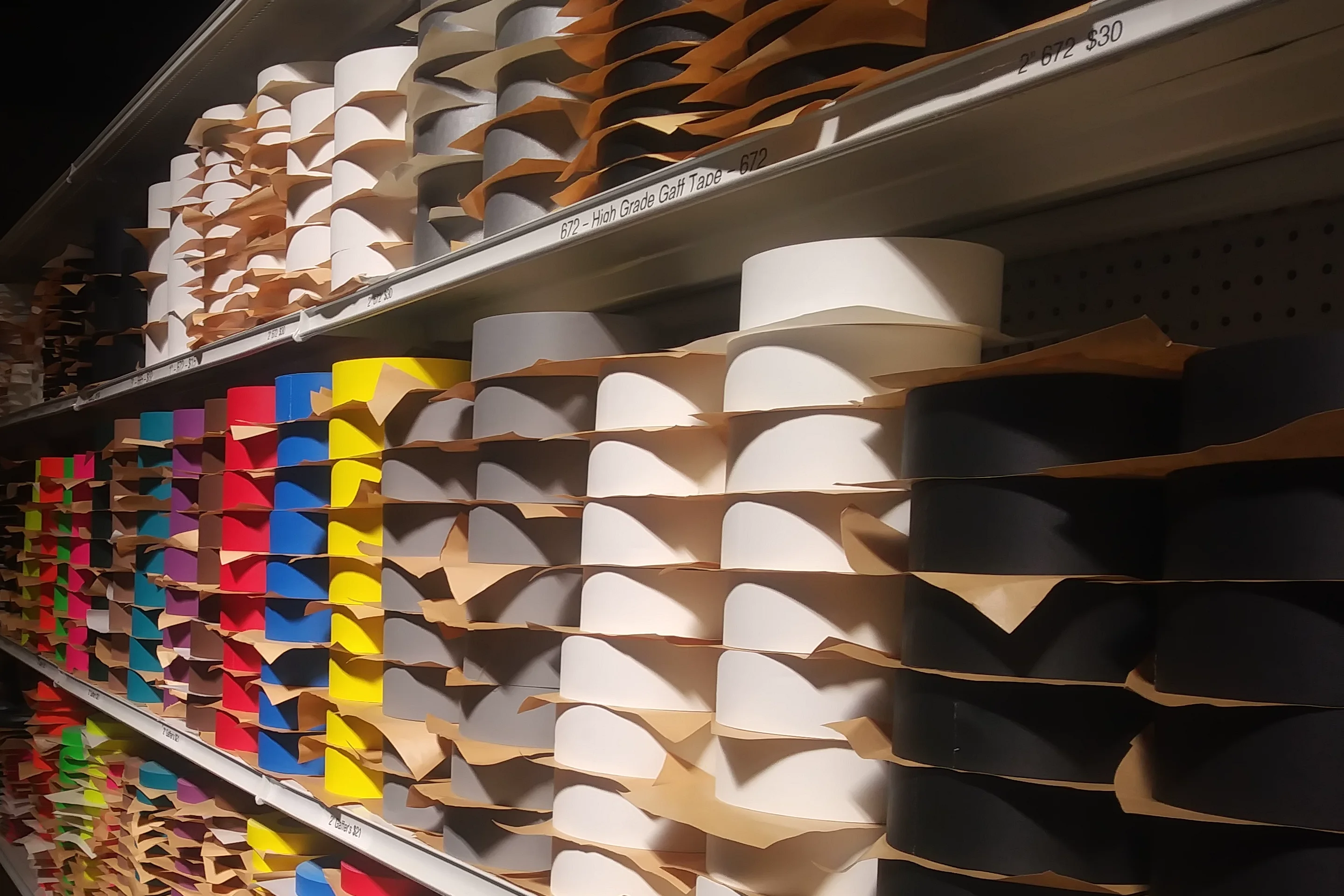
Photo: Robert.Harker under CC BY 4.0. Cropped and converted to a web format.
Lowell was no ordinary inventor either. He founded Lowel-Light, built a compact lighting system that earned him a Technical Oscar in 1980, and held twenty patents. But his best-known invention remains the roll of tape found in every crew bag today.
Why is it called "gaffer"?
Simple: it is named after the gaffer. On a film or television set, that is the head electrician, the person in charge of lighting. Gaffers used the tape most: taping down cables, securing lamps, fixing anything that was loose. "The gaffer's tape" became gaffer tape, then gaffa.
Another word that conquered the world from the workshop floor. The nadar got its name from the press, the ty-rap from a brand, and gaffa simply from the person who used it most. It does not get more honest than that.
Gaffer tape vs. duct tape: not the same. Really.
This is the section you can send to anyone who calls your roll of gaffer tape "duct tape".
Duct tape is older. It was developed during the Second World War to seal ammunition cases against water. Plastic backing, shiny, dirt cheap, and an adhesive that behaves like chewing gum on a summer day: it sticks to everything and leaves residue everywhere.
Gaffer tape is the thoughtful cousin:
- Cloth backing instead of plastic: tears straight and cleanly by hand.
- Matte instead of shiny: it does not reflect stage lighting or show up on camera. That is why you never see the tape on television, only the show.
- Heat resistant: it does not melt next to a lamp or on a warm cable.
- Comes off cleanly: no adhesive residue on the venue's dance floor, no angry venue manager.
That last point is exactly why gaffer tape costs so much more than duct tape. And why it is worth every cent. Use duct tape on a venue's parquet floor once, and you will understand for the rest of your life.
In practice: which gaffer tape for what?
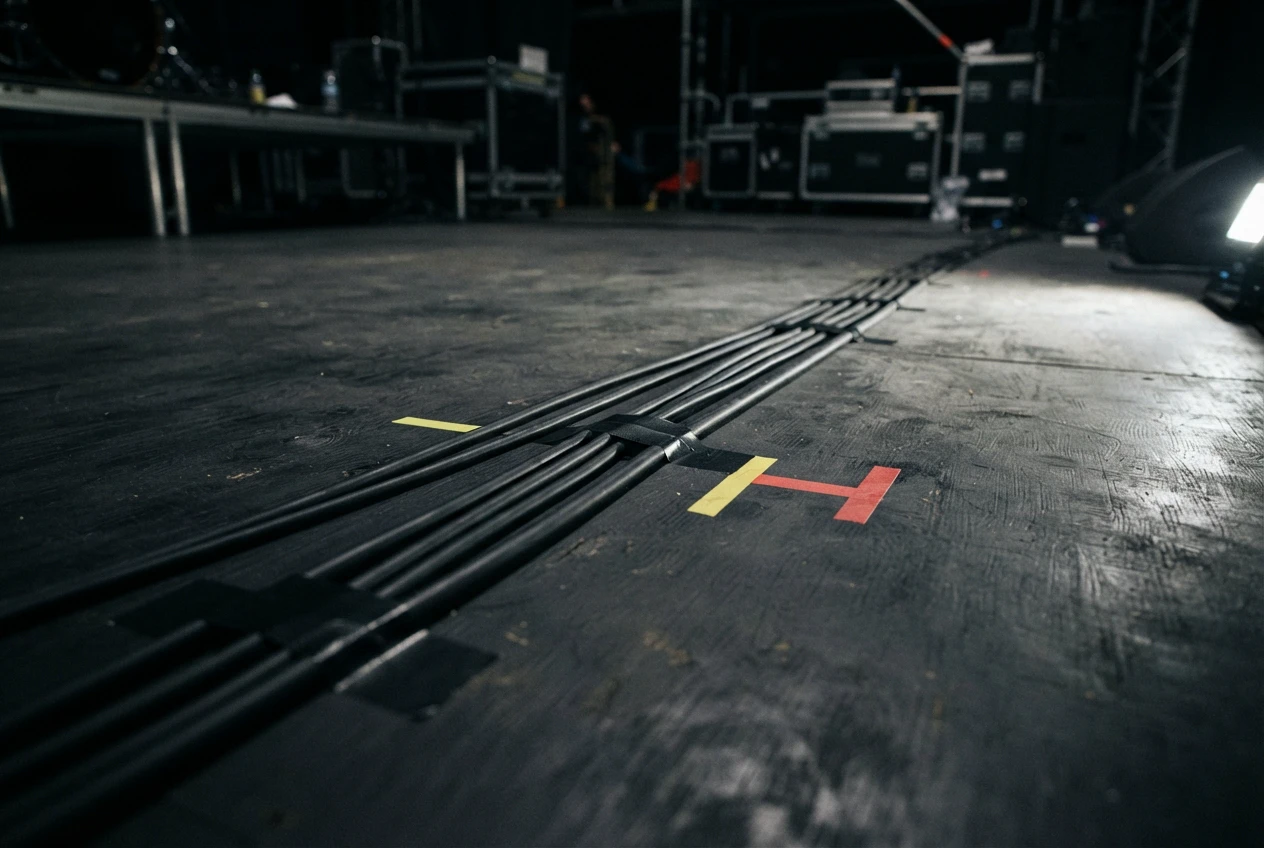
Width
- 50 mm: the standard. Cables on the floor, securing just about anything.
- 25 mm: finer work, bundling, labelling.
- 19 mm (spike tape): the narrow coloured version for marking positions on stage. Where the monitor goes, where the artist stands, where the piano belongs.
Colour
- Black: 90% of all jobs. Invisible on a black stage.
- White: for writing on. Labels on trunks, cables and cases.
- Fluorescent and coloured: spike marks, danger zones, stair edges.
Quality
- Cheap gaffer tape exists, but it is false economy: less grip, frayed edges, and it still leaves residue. One good roll does more than three bad ones.
⚠️ And here too, one golden rule: gaffer tape is not lifting equipment and not electrical insulation. Taping cables to the floor: yes. Hanging a lamp from tape or "insulating" a power connection: never. That is what safeties and electrical tape are for.
What is gaffer tape called abroad?
Belgium & the Netherlands
- Gaffa, gaffatape, sometimes stagetape or podiumtape.
English-speaking world
- Gaffer tape or gaff tape in the US. Anyone who says "duct tape" on set gives themselves away immediately.
Germany
- Gaffa or Gewebeband, literally woven tape. In the event industry, simply Gaffa.
France
- Gaffer, pronounced the French way: "gaffeur". It almost sounds like a compliment.
A few fun facts
- The origin of duct tape is a mother's story. The idea for waterproof military tape during the Second World War came from Vesta Stoudt, a worker in an ammunition factory and the mother of two sons serving in the Navy. She personally wrote a letter about it to President Roosevelt. And she was proven right.
- Tape in space. During the Apollo 13 mission, duct tape helped fix the CO₂ filters on board. The astronauts literally taped together their chance of survival. Our dad would have been proud.
- Spike tape gets its name from the theatre. "Spiking" means marking the positions of scenery and performers on the stage floor. A custom that goes back centuries, long before tape existed. Back then, they used chalk and nails.
- The most expensive roll in the venue. Ask "does anyone have gaffa?" on any job and watch how slowly everyone reaches for their own roll. Lending out gaffer tape is the fastest way to lose it. Good crew gives you a piece, never the roll.
One filmmaker with a problem, a roll of cloth with good adhesive, and 65 years later half the event industry is held together by it. And so is our dad's jacket.